
Cello Month ~ March 2015
Cello Makers
Andrew Carruthers
A native of Oxfordshire, England, Andrew Carruthers worked at the Lawrence Berkeley Research Labs before deciding to follow his passion for building stringed instruments.
He studied at the Welsh School of Violin Making and Repair, near Cardiff. After graduating he joined the restoration workshops of Bein and Fushi in Chicago to apprentice under the guidance of master cello restorer, Russell Wagner.
In 1996 Carruthers opened his own workshop in Santa Rosa, California, providing restoration services to the violin trade. Regular clients include some of the world’s leading violin dealers.
He now spends most of his time building new instruments. Carruthers’ violins, violas and cellos are played by professional and amateur musicians across the US and in Europe.

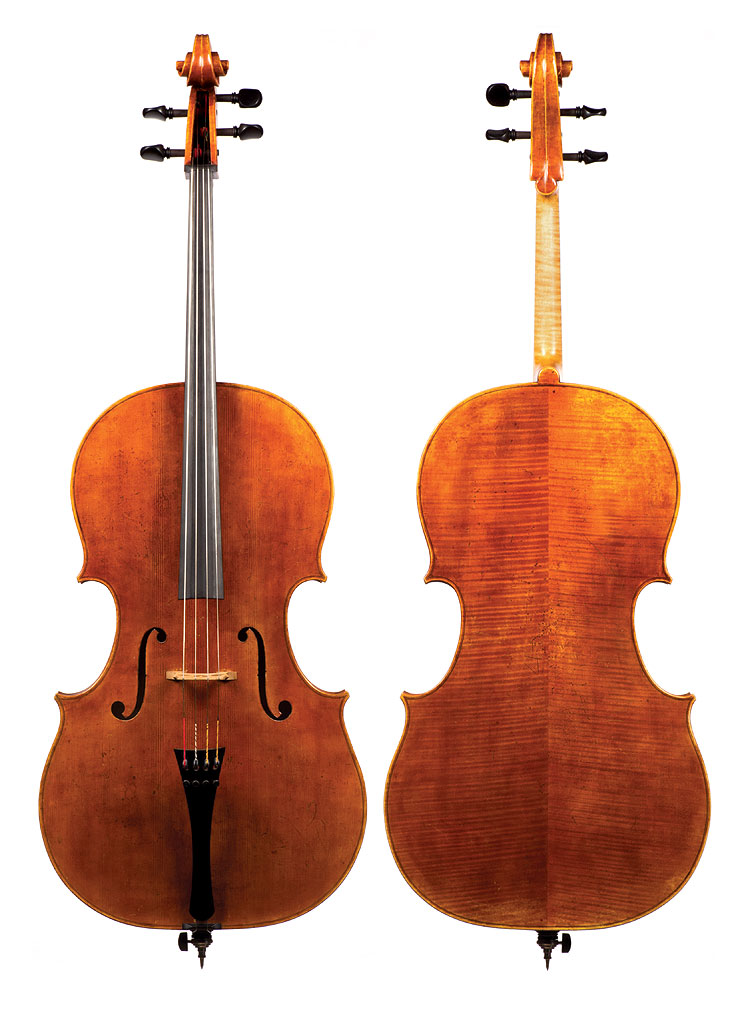
Arie Werbrouck
Arie Bernard Werbrouck is a Flagstaff, AZ based instrument maker, specializing in fine violins, violas, and cellos. Born in Belgium, he moved to the United States in 1989.
A graduate of the Interlochen Arts Academy, Mr. Werbrouck attended New England Conservatory, where he completed his Bachelor's Degree in Music Performance. He later graduated from the North Bennett Street School of Violin Making in Boston, under the instruction of Roman Barnas.
Mr. Werbrouck has worked under such prestigious violin makers as Ray Melanson and Feng Jiang, in addition to serving as assistant instructor to Francis Morris at the University of New Hampshire Violin Summer Program. Former luthier positions include Johnson Strings in Boston, MA, and Shar Violin Shop in Ann Arbor, MI.

Benjamin Ruth
Among the most highly regarded contemporary violin makers, Benjamin Ruth was awarded gold medals for both violin and viola in the 2012 VSA international competition. Active in violin making for 40 years, his instruments have been featured by leading violin shops nationwide.
Today, Mr. Ruth concentrates on working directly with musicians to create ideal instruments for demanding careers, with the help of his wife Susan. They live and work in Boston’s North Shore.
Mr. Ruth is committed to the highest standard of artistry in violin making, and is a leading participant and teacher in the Oberlin Violin Making Workshop, a highly regarded gathering where top notch makers from all over the world come together to exchange ideas and knowledge. He has also participated in similar professional development events in Europe.

Daniel Arlig
Daniel Arlig played viola at a young age and eventually went on to double bass performance at New England Conservatory of Music in Boston.
He graduated with honors in String Instrument Repair from Minnesota State College - SE Technical in Red Wing, Minnesota before going on to study Violin Making and Restoration at the North Bennet Street School in Boston where he studied with Kevin Kelly, David Polstein & Thomas Hummel. After graduating violin making school, he returned to Minnesota and apprenticed with John R. Waddle.
He currently lives and works in Minneapolis making violins, violas and cellos, while performing regularly as a multi-instrumentalist in the Twin Cities Area. He was awarded an Honorable Mention in the 2012 Art of Sound Violin Making Competition and is a member of The Violin Society of America.


Eric Caldwell
Eric Caldwell is a 6th generation woodworker from Lawrence, Kansas and his early interests in violin making came from his family history as well as a personal interest in music. While studying oboe in California, Caldwell enrolled in a summer workshop making violins with Karl Roy at California Lutheran University. He continued studying with Roy for three more summers at the University of New Hampshire.
From 1998-2009, he worked mostly as a repairman for many shops in New England, the mid-west, and the mid-atlantic United States. Caldwell started working for the Potter Violin Company in 2006 and soon thereafter assumed responsibility as Repair Department Manager. He left the firm in 2009 to pursue instrument making full time in his home workshop.
He has won several awards including the Certificate of Merit for Tone for Violin from The Violin Society of America's 19th International Competition and Exhibition in Cleveland, Ohio in 2010 and was invited to include two violins at The Art of Sound 2011 Exhibition and color photograph book of living makers by A. Cavallo Violins, LLC.
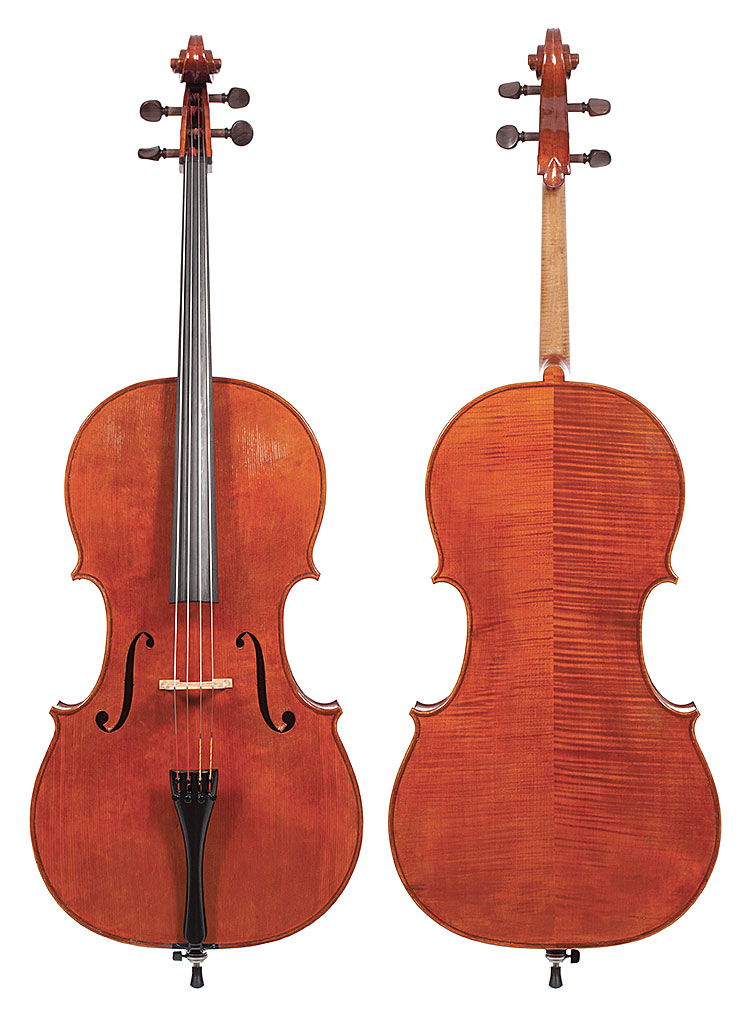
Elio Severgnini
Elio Severgnini was born in Castelleone (Cremona) on the 14th April, 1971. His interest in violin making was sparked when he attended a course in artistic carving directed by master Giuseppe Milanesi from 1982 to 1990. Meanwhile, in 1985, he enrolled in the International Professional Institute for Wood and Violin Making Handicraft (Istituto Professionale Internazionale per l'Artigianato Liutario e del legno) "Antonio Stradivari" under the direction of master Vincenzo Bissolotti, receiving in 1989 the certificate of Master Violin Maker. Every year of his 4-year school career, he gained the "Walter Stauffer" education grant, issued by the homonymous foundation. He was then invited by Master Francesco Bissolotti to join his own studio in Cremona from 1990 to 1992, where he could polish different techniques of instruments handwork and brush-painting.
In 1993 he started his professional career, opening his own studio in Castelleone. He immediately started working with many prestigious violin makers as: Master Pierangelo Balzarini, Master Primo Pistoni and Master Josè Maria Lozano. With Master Josè Maria Lozano he deepened the studies and the search for different kinds of oil polish and, in particular, for polish based on fossil amber.
Elio Severgnini builds his instruments (in new and antique style) following the Classic Cremonese method, taking his inspiration from the masterpieces by the great Italian masters of '700. His instruments are played by professional players in the best orchestras in the world, by conservatory students and by collectors. During his career, he took part in many international competitions and there received the following prizes among others: 1994: 5th place, gained with a cello, at the 11th International Competition in Oakland - California, organized by the "Violin Society of America"; 1995 : Silver medal for a violin and Certificate of Merit for a viola at the 12th International Competition in Albuquerque - New Mexico organized by the "Violin Society of America".

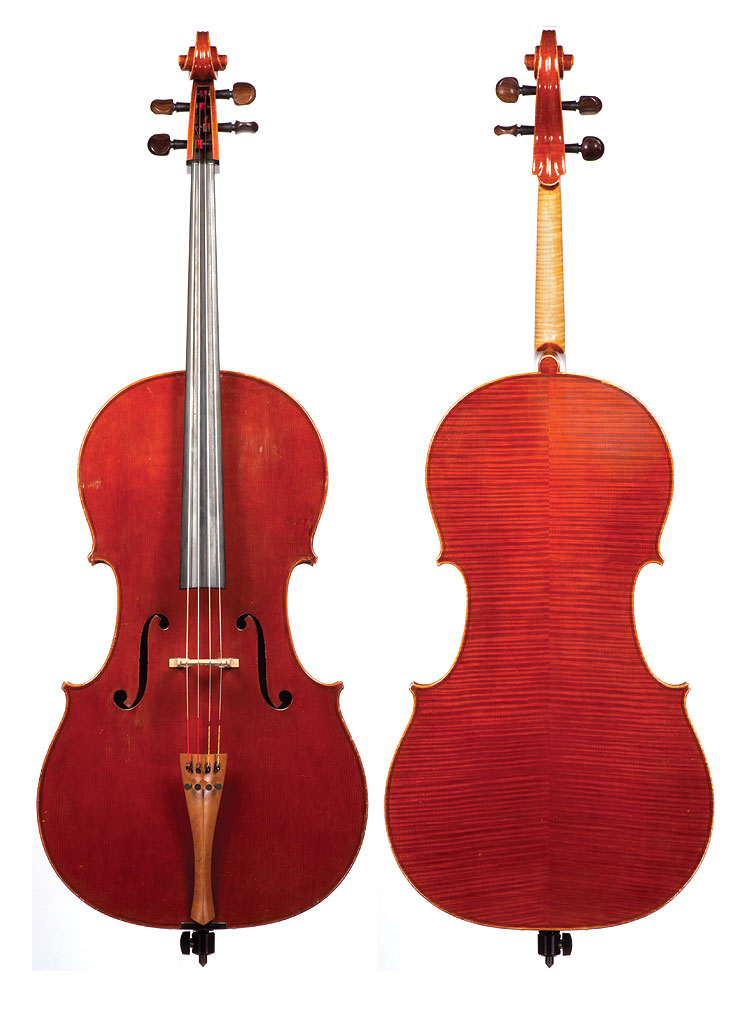
Gregory Walke
Gregory Walke has been making instruments since 1979 when he started studying at the Welsh School of Violin Making and Repair. After 7 years studying and working in Wales and Germany (his last position was with Hieronymus Koestler in Stuttgart), he returned to Canada.
In 1988 he established a studio with Sibylle Ruppert in Paisley Ontario. He has worked as a freelance restorer for various shops in North America, including Peter and Wendy Moes; throughout this time he continued making violins violas and cellos. Today he dedicates his time solely to making instruments.

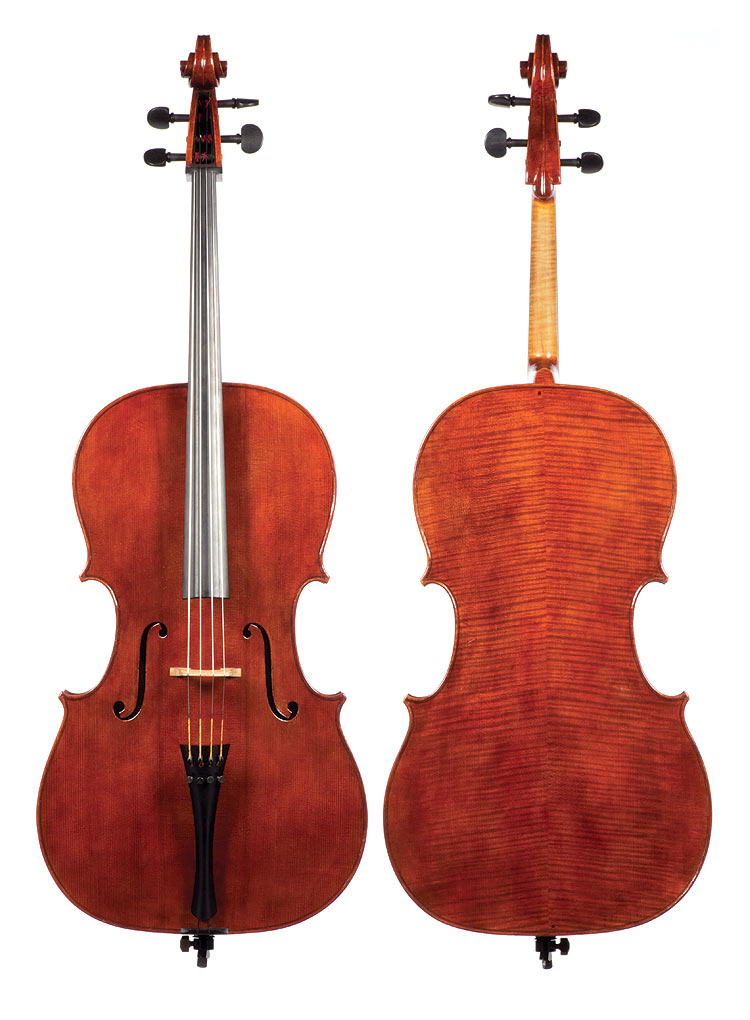
Guy Rabut
Guy Rabut was raised in a musical and artistic family where he began to play the cello at the age of nine. Along with his musical studies he also developed a strong interest in the visual arts through his father, an artist by profession. This seminal association with music and art led to his career in violin making which began at The Violin Making School of America in Salt Lake City, Utah, where he graduated in 1978. For the next five years Mr. Rabut worked for the prestigious firm of Jacques Français in New York City under Master restorer René Morel, where he had the privilege to work on many important Italian instruments played by some of the world's greatest artists.
In 1984, Mr. Rabut established his own shop in New York City, dividing his time between making and restoring instruments. The opportunity to restore some of the finest instruments that exist in the world today provided an open window into the minds and the techniques of the great makers of the past. In 1992, with the opening of a workshop in Carnegie Hall, he began to focus exclusively on creating new violins, violas and cellos. As Mr. Rabut celebrates his twenty eighth year in New York, he continues this dedication to new instruments in his workshop high above the rooftops in the Chelsea district of Manhattan. The spacious new studio has provided a wonderful creative and productive environment.

James McKean
In 1973 James McKean joined the first group of students at the first violinmaking school in America, in Salt Lake City. Graduating in 1977, he returned to New York City, where he spent the next four years working under the noted luthier Vahakn Nigogosian, learning the techniques of repair, fine restoration, and set up. McKean opened his own shop in 1981. Even though he offered a full range of services, from restoration to handling the sale of fine antiques, the primary emphasis was always on making instruments, which have over the years garnered several awards in international competitions. In 2006 he moved the shop from Manhattan to devote his time solely to making instruments, which he does from his home in Westchester County. To date he has made well over two hundred violins, violas, and cellos.
As corresponding editor to Strings Magazine, McKean has over the past thirty years written extensively on all aspects of the violin. His articles have also appeared in the Strad, and his recent memoir, Art’s Cello, was selected by its publisher, Kindle Singles, as one of the twenty best books of the year.

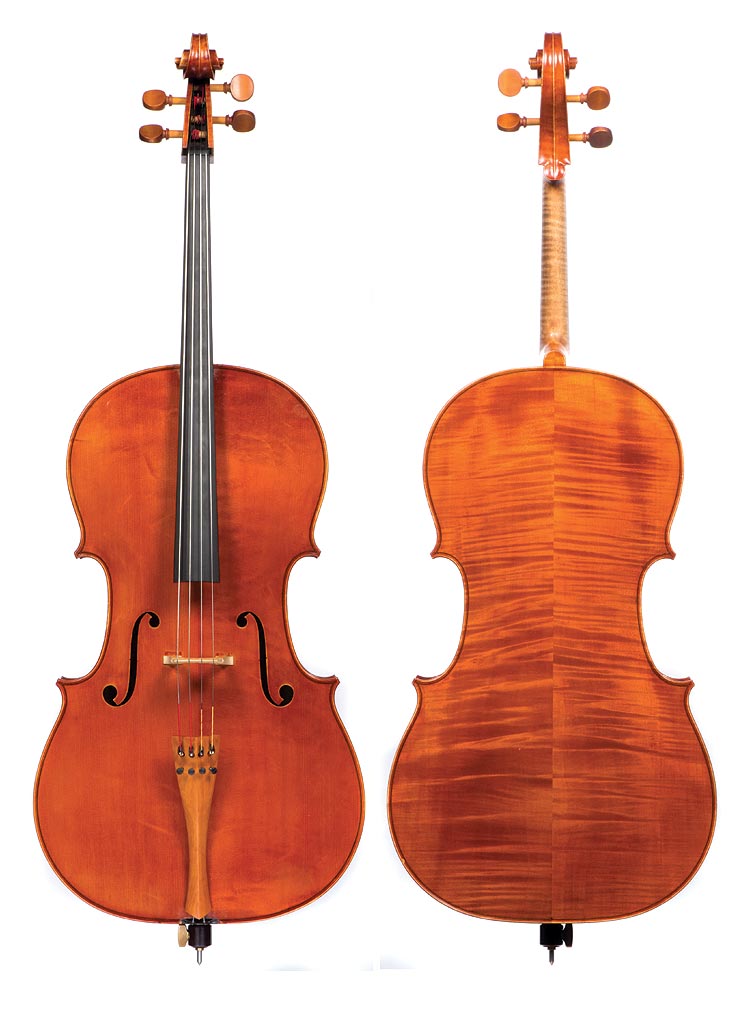
Jason Starkie
In 2011 Jason Starkie opened a shop in Seattle producing fine cellos and violins under his own name for serious musicians including Lori Goldston and Ronald Thomas.
Jason apprenticed in the shop of Viseltear and Young, NYC, during the early 0s then moved to France to continue as Robert Young’s assistant.
His cello models are a 1690 Giovani Grancino, based on analysis of Francois Denis, and more recently, a cello suitable for smaller players, after Paganini’s 1717 Pietro Giacomo Rogeri.
His violin model is the Plowden del Gesu informed by work at Oberlin.
Jason continues to enrich his practice with the Maker’s and Acoustics workshops at Oberlin and engages in further investigations of optimizing issues of the tone and playability of instruments with Kevin Krentz. Jason is also participating in the VSA’s New Professionals program currently developing its scope and goals.

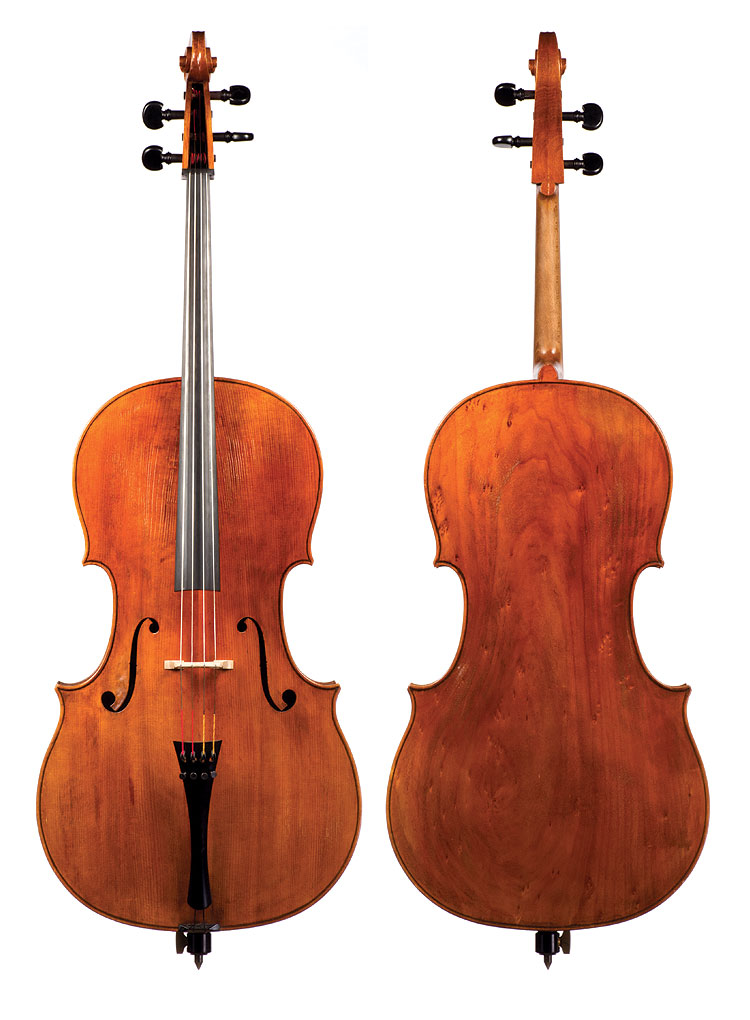
Lawrence Wilke
Lawrence Wilke’s interest in musical instruments began when he started playing cello at 8 years old. He began his studies with Marijane Carr Seigal of the Lyric Opera of Chicago, who also taught his uncle violin maker David Caron. He completed his cello studies from 1981-84 with Dr. William Klenz of SUNY Binghamton.
He began his apprenticeship as a violin maker in 1978 at the age of 16 with his uncle, master violin maker David Caron. During this time he also studied bow making and repair with Philip Krause. In 1986 he completed his studies when he went to work for Andrew Dipper in Taynton England where he studied design and restoration. In 1988 he opened his own studio making violins, violas and specializing in cello making.

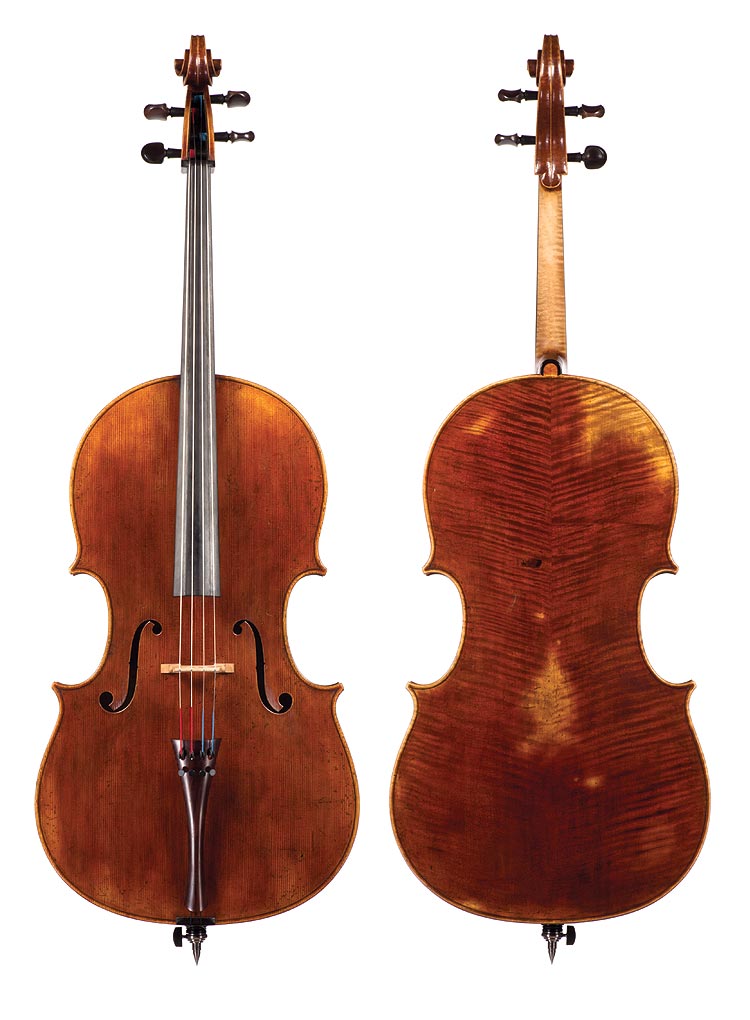
Michael Doran
Michael Doran graduated from the Violin Making School of America, where he studied under Charles Woolf and Peter Prier. Michael has the distinction of finishing the coursework of the four year program in three years.
Currently he divides his time between making new instruments and restoration and repair. Michael has also participated in the Oberlin College Violin Making Workshop, a unique experience where the finest makers from the world over share their wealth of knowledge while they work side by side.
Michael has received several awards in the Violin Society of America’s violin making competition in recognition of his work. These include a Gold Medal for Cello, a Silver Medal for Cello Tone, and Certificates of Merit for Violin and Cello Tone. He has also served as Guest Examiner for graduating students at the Violin Making School of America. Michael has been privileged to be part of such a rich lineage of excellent teachers. New making and restoration work both fulfill different aspects of Michael’s passion for violins.


Michèle Ashley
Michèle Ashley was raised in the U.S. and completed her secondary education in France, studying cello as well as ethnomusicology. She attended the International School of Violinmaking in Cremona Italy at the age of 19 where she studied under the tutelage of G.B. Morassi and Pietro Sgarabotto. Graduating in 1975, she established her own violinmaking shop, first in the foothills outside of Parma, and later in the city of Verona, where she studied briefly with Renato Scrollavezza, and afterwards apprenticed with Mario Gadda of Mantova for whom she worked and made copies for many years. Many of her instruments of that period are being played on in major symphonies throughout Europe and Asia.
In 1985 she transferred her activity to Boston, Massachusetts, where she has worked out of her own shop making violins and violas, but focusing primarily on cellos. To date she has made over 130 instruments owned and played by symphony musicians across the US, as well as by students and faculty of the Curtis Institute, the New England Conservatory, and the Julliard School of Music. In 2004, she opened a second shop in Montreal, Quebec, and lives and works between Canada and the US.

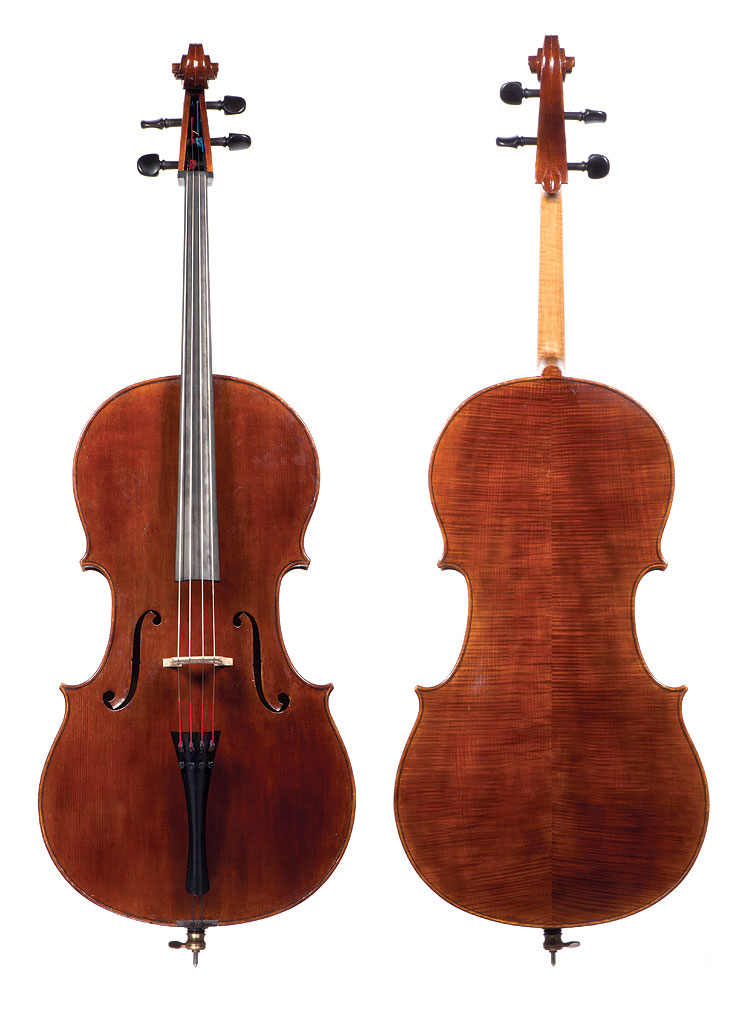
Nathan Slobodkin
Nathan Slobodkin is a native of Ann Arbor, Michigan, whose more than 40 years in the musical instrument field include an internship in the musical instrument collection of the Smithsonian Institution; five years of building violins, violas and cellos in the W.H. Lee workshop, Chicago; two years on the restoration staff of Jacques Francais Rare Violins, New York; and a twelve-year collaboration with Reuning & Son Violins Boston, producing more than seventy cellos modeled after the famous Ex-Messeus Guarnari del Gesu. He has done work for many violin shops around the United States and his instruments have been sold in Europe, Asia and across North America.
He was awarded a Certificate of Merit for Workmanship by the Violin Society of America in 1996 and a second prize for violin making at the Art of Sound International Violin Making Competition in 2014. He is a member of the American Federation of Violin and Bowmakers and maintains an active dialogue with colleagues around the world sharing new thoughts and developments in the violin-making profession.
He has recently attended professional development workshops at Oberlin Conservatory and Emerson Arts Centre.
Since 1993, Mr. Slobodkin has operated a full-service violin shop in Bangor, Maine, offering violins, violas, cellos and accessories in all price ranges. Today, he continues to make new instruments of individual personality that meet the demands of the most discriminating professional musicians while remaining within the financial resources of both the young professional and the serious student.

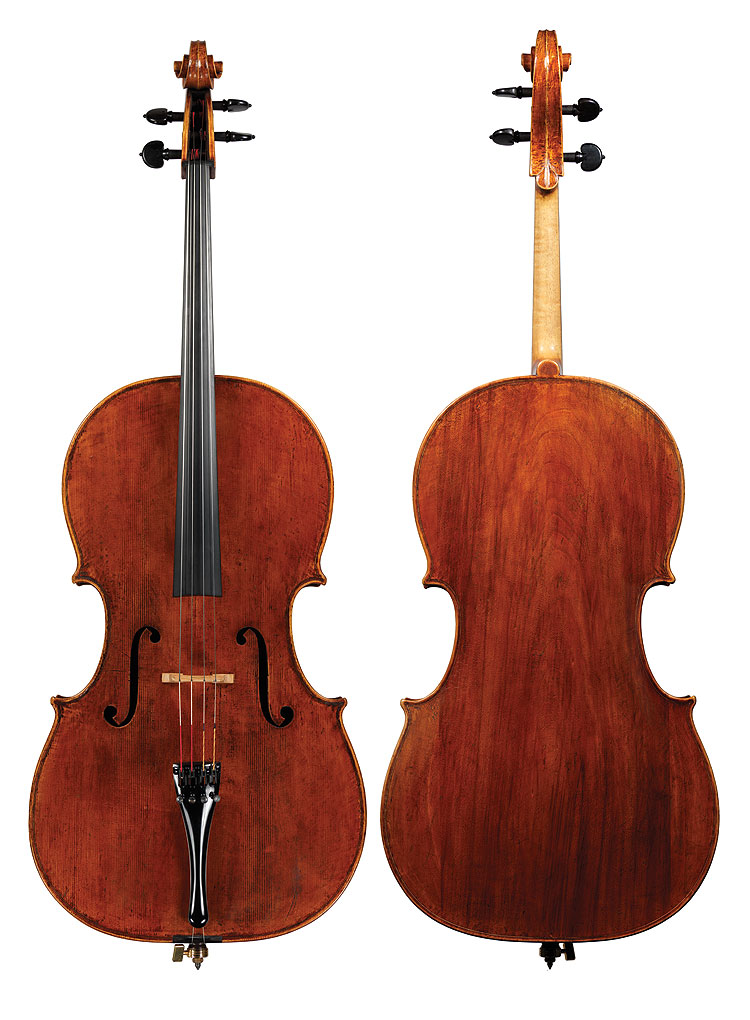
Nicolas Gilles
Nicolas Gilles was born in 1977 in Montpellier, France, where he expressed an interest in music from a very early age. He pursued diplomas as both a performer and instrument maker.
Upon formal completion of his training, Nicolas opened his own workshop in Montpellier. He has won many awards for his instruments, notably the gold medal for quartet, gold medal for viola, and silver medal for cello workmanship in 2004 at the Violin Society of America International Competition; silver medal for cello at the VSA in 2008; silver medal for cello at VSA 2010; silver medal for cello craftsmanship and for sound quartet at VSA 2012. In addition he won a sound award in 2014 from cellist Eric Picard at the cello making competition in Paris. His instruments are in high demand.

Paul Crowley
Paul started playing music at the tender age of eight and made his first guitar in 1993. In college, he majored in music and studied bass with Drew Gress. He then played bass professionally for several years and has also worked as a recording and live sound engineer. In 2002, Paul graduated from the North Bennett Street School's renowned violin making program. Upon graduation, he worked with Michele Ashley and Marco Coppiardi, learning violin making in the Italian tradition. Paul regularly attends the Oberlin College violin-making workshop where some of the finest violin makers in the world come together for two weeks each summer to collaborate and share new ideas. In 2004, one of his violins won a silver medal at the VSA international violin making competition. He was elected to the American Federation of Violin and Bow Makers in 2010 and is a member of the Violin Society of America. To date, he has made approximately 100 violins, violas and cellos.

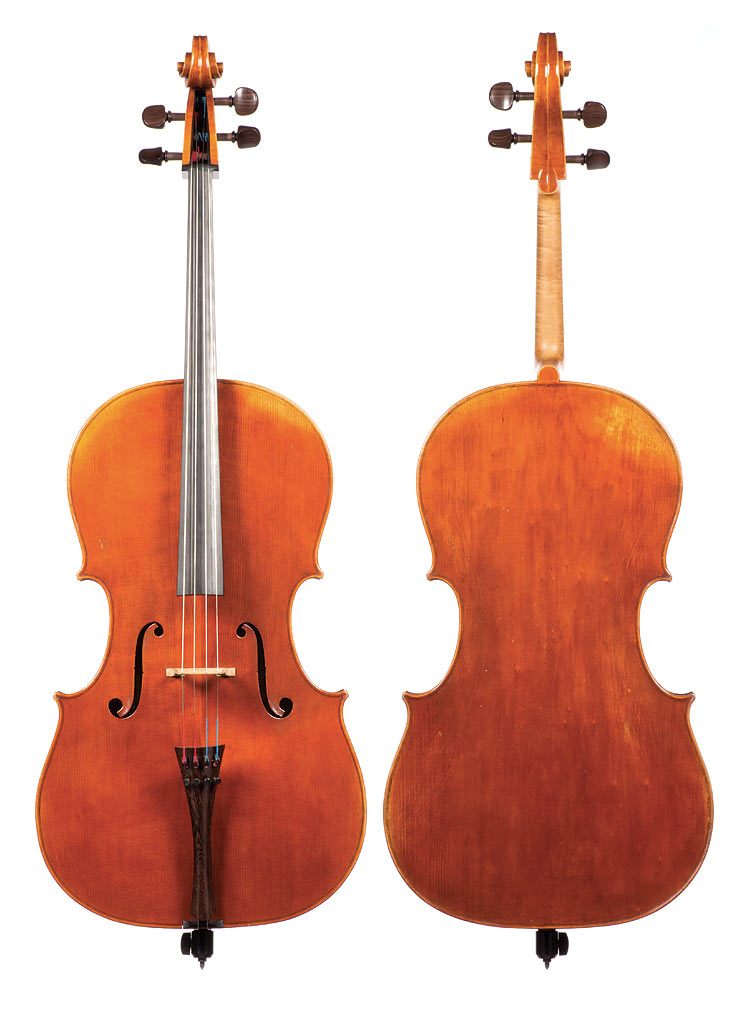
Rainer Beilharz
Rainer Beilharz began his violinmaking career in 1982 at 18 years of age with John Ferwerda in Melbourne, Australia. Rainers career has been one of continual search for improvement based on an understanding of the great masters of violin making in the eighteenth century.
He worked for seven years in Germany, including two years with Bernhard Franke, and three with Antoine Muller in Stuttgart. In 1997 he returned to Australia as a full-time maker. Among his many accomplishments he was a co-organizer of the groundbreaking Violin Makers Conferences in Guildford in 2003, 2006 and 2012 and is a founding member of the Australian Violin Makers Association.

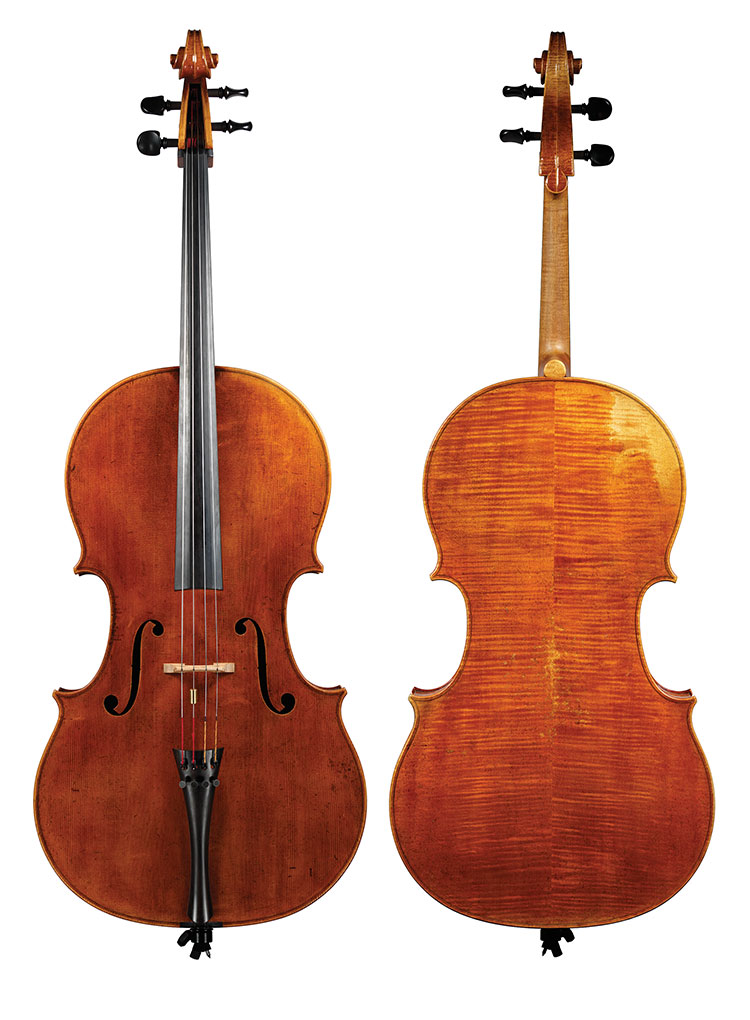
Raymond Melanson
In the mid 1970's, Ray studied Art, and violin performance at the University of Lowell in Massachusetts. At the suggestion of one of his professors, who saw his ability in working with wood, Ray decided to take courses at the University of Rhode Island. There he studied bow repair and rehairing with Arnold Bone, and violin repair with Hans Nebel. At the suggestion of Hans Nebel, he traveled to Salt Lake City, Utah to study violin making with Peter Paul Prier at the Violin Making School of America. During that time and after graduating, Ray worked in violin shop at Peter Priers for two years doing repairs and restorations.
In 1983, Ray traveled back to Massachusetts to develop the violin making program at the North Bennett Street School in Boston. He was the founding teacher of the program. During the four years that he taught at NBSS, he continued making and restoring stringed instruments. Since then, he has maintained his own shop.
Raymond Melanson’s violins have been distinguished by 14 awards given at competitions of the Violin Society of America. Three of them silver medals for tone. Most recently, he won a Gold Medal for tone at The 2012 Art of Sound International Completion. During his 30 years as a violin maker, he has built over 300 instruments, 80 of them cellos. His instruments are owned by musicians all over the world, many of them by well known soloists, musicians in major orchestras, and recording artists.

Stephen Cournoyer
Stephen Cournoyer is a graduate of the North Bennet Street School and a member of the American Federation of Violin and Bow Makers. He takes inspiration from 17th and 18th century classical Italian models of instruments, looking to the past to inform the future and meet the needs of the modern musician.

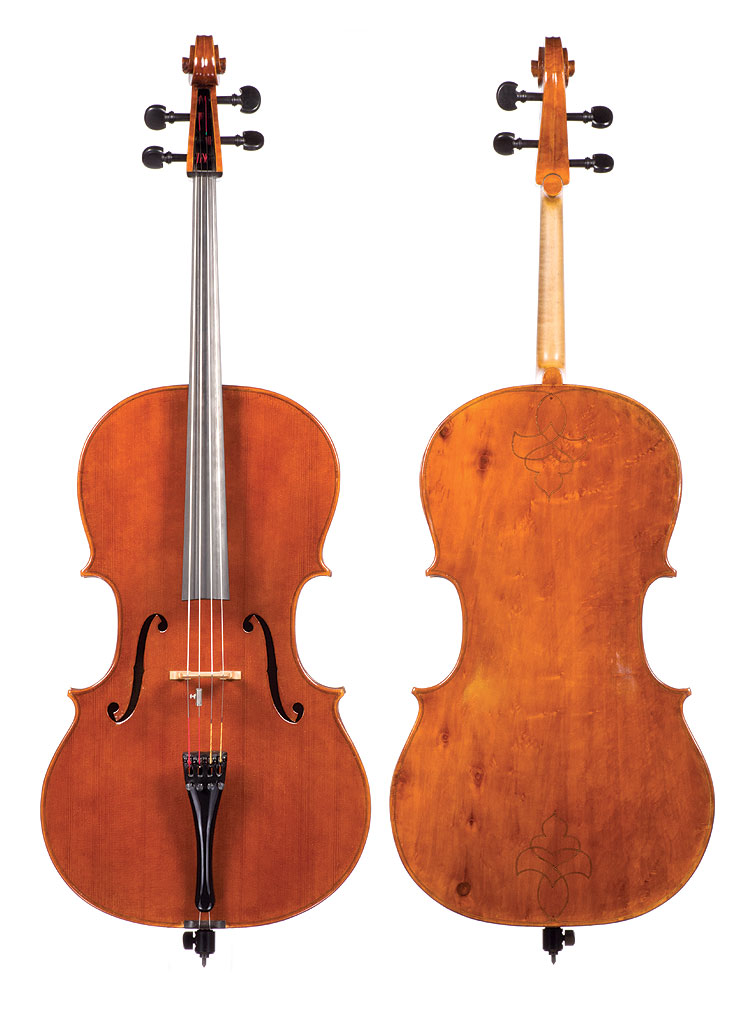
William Whedbee
William Whedbee was born in Hawaii in 1952 and came to Chicago in 1970 to attend the University of Chicago, graduating in 1974. During his years there he studied with Italian sculptor Virginio Ferrari and with musicologist Howard Brown. This combined interest in music and wood-sculpture led to his traveling to Cremona, Italy in 1976 to train at the Institute of Violin Making under Scarpini, Bulfari, Conia and Morassi.
He returned to Chicago in 1979 at the invitation of William Harris Lee to found and develop a violin-making workshop there. During his twelve years with Lee, he built more than 400 violins, violas and cellos, as well as training and supervising nearly twenty violin-makers from around the world.
Since 1992 he has worked independently in his own workshop on Chicago's North Side, focusing primarily on building cellos in response to growing demand from players and teachers. He has now completed more than 200 cellos, 275 violins, and almost 300 violas. The tone of his cellos meets with high praise from cellists and teachers around the world, including Alan Harris, Stephen Kates, Franz Helmerson, Hans Jorgen Jensen, Yehuda Hanani, Owen Carmen, Tanya Carey, Helga Winold, Richard Hirschl, and others. They are sought by students and professionals from Korea to Norway, and from Canada to Mexico.